Motivation
Another Eyewitness?
The Motivation?
Every historical investigation eventually reaches the same question.
Why?
If Tsar Nicholas II truly escaped Russia with Allied assistance, why would the United States, Great Britain, and other governments devote extraordinary effort to keeping that story hidden?
Why would the Bolshevik government insist that the Romanovs had all perished?
And why, more than a century later, does the question continue to generate such intense debate?
Perhaps the answer lies not only in politics, but in economics.
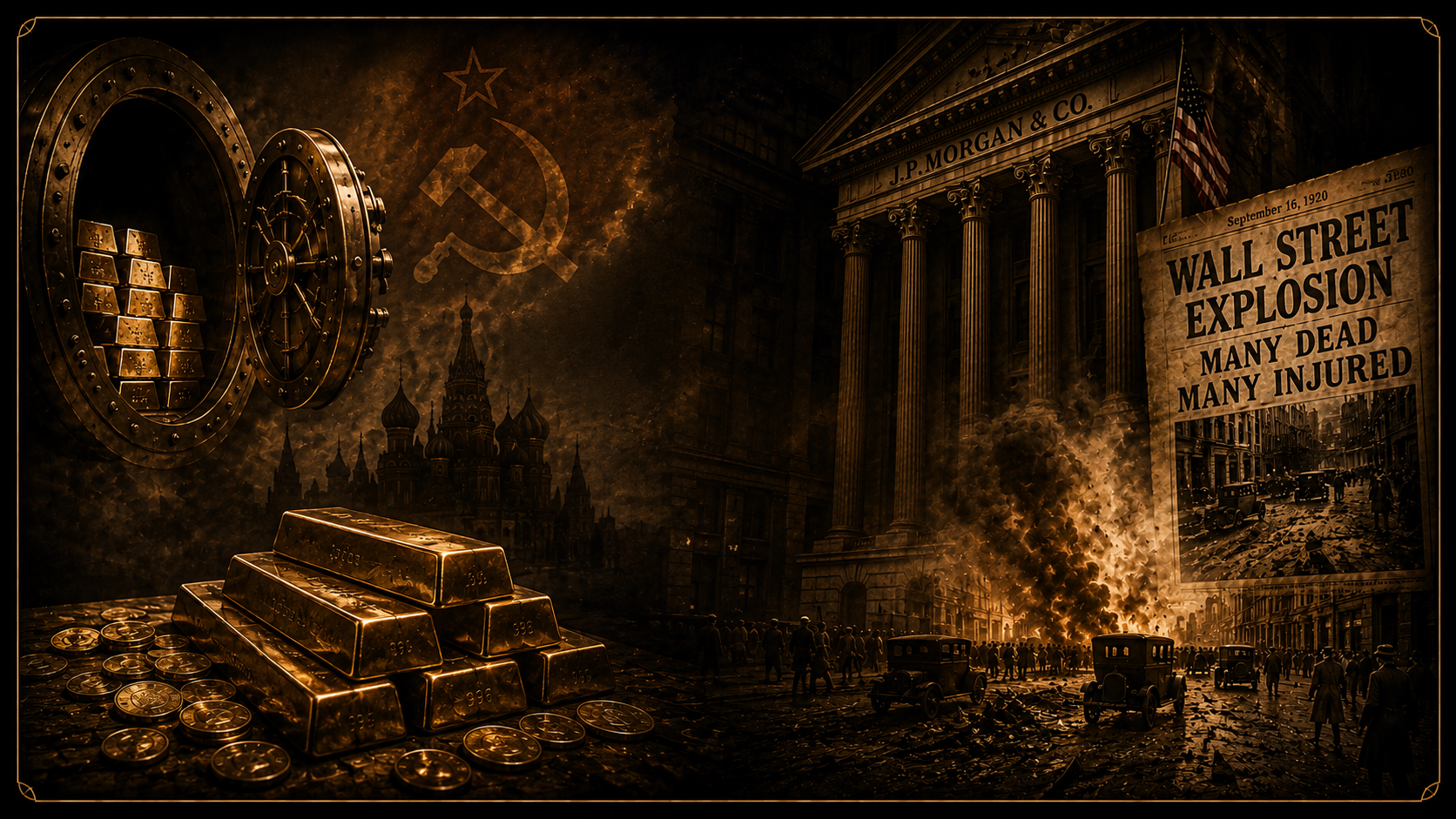
According to the investigation presented throughout History Had Eyes, one of the objectives following the alleged evacuation of Nicholas Romanov was the protection of substantial Romanov assets that had survived the Russian Revolution. Family testimony and other evidence explored in this project suggest that part of those assets was intended to be transferred through New York, where financial institutions could safeguard them beyond the reach of the Bolshevik government.
On September 16, 1920, a devastating explosion occurred on Wall Street outside the Morgan Bank, killing dozens of people and injuring hundreds more. Historians generally attribute the bombing to anarchist extremists, although the crime was never conclusively solved.
This investigation asks a different question:
Could the timing and location of that attack have intersected with a larger story involving the movement of Romanov wealth?
If so, the implications would have been profound.
Estimates associated with the alleged transfer have suggested that Romanov assets involved may have approached $900 million in 1920 dollars. Depending on the method of comparison, that amount would represent tens of billions of dollars in today's purchasing power and, if one considers the appreciation of monetary gold itself over the past century, potentially far more.
Such wealth would have represented not merely a family fortune.
It would have been a political symbol.
It would have represented a potential source of support for anti-Bolshevik forces, Russian émigrés, and any future effort to restore the Romanov dynasty.
Viewed through that lens, every government involved had powerful incentives.
The Bolsheviks benefited if the Romanovs were believed dead, removing a living rival to the new Soviet state.
The Allies benefited if a successful rescue remained secret, protecting those involved and reducing the risk of retaliation or renewed conflict during a fragile postwar peace.
King George V avoided placing Britain's constitutional monarchy at further risk during a period of political uncertainty.
President Woodrow Wilson could pursue postwar diplomacy without publicly acknowledging a covert humanitarian operation that might have complicated relations with revolutionary Russia.
Whether these motivations accurately explain events is the central question explored throughout this documentary series.
History often turns not only on what happened.
It also turns on what powerful nations decide the world should believe happened.
Could It Matter Today?
One of the most frequently asked questions posed by viewers is whether confirmation that Nicholas II survived would have legal consequences today.
The answer is not straightforward.
Modern international law generally recognizes governments and property rights based on subsequent treaties, recognition, statutes of limitation, sovereign immunity, and later legal developments. Even if compelling new historical evidence emerged regarding Nicholas's survival, it would not automatically overturn the legitimacy of the Russian Federation or invalidate more than a century of international recognition.
That said, verified evidence of survival could prompt important historical and legal questions, including:
Whether aspects of the Romanov historical narrative should be revised.
Whether museum collections, archives, or historical records should be reexamined.
Whether unresolved private property or family inheritance claims deserve renewed study.
Whether official accounts surrounding the fate of the Imperial Family should be reconsidered in light of new evidence.
Those questions would be for historians, courts, governments, and the Romanov descendants, not this documentary, to evaluate.
"Sometimes the greatest mystery is not whether history was hidden. It is why so many powerful people may have wanted it hidden."