Behind the Scenes
Every historical investigation has two stories. The first is the history itself. The second is the journey taken to uncover it.
Behind the Scenes opens the door to that second story.
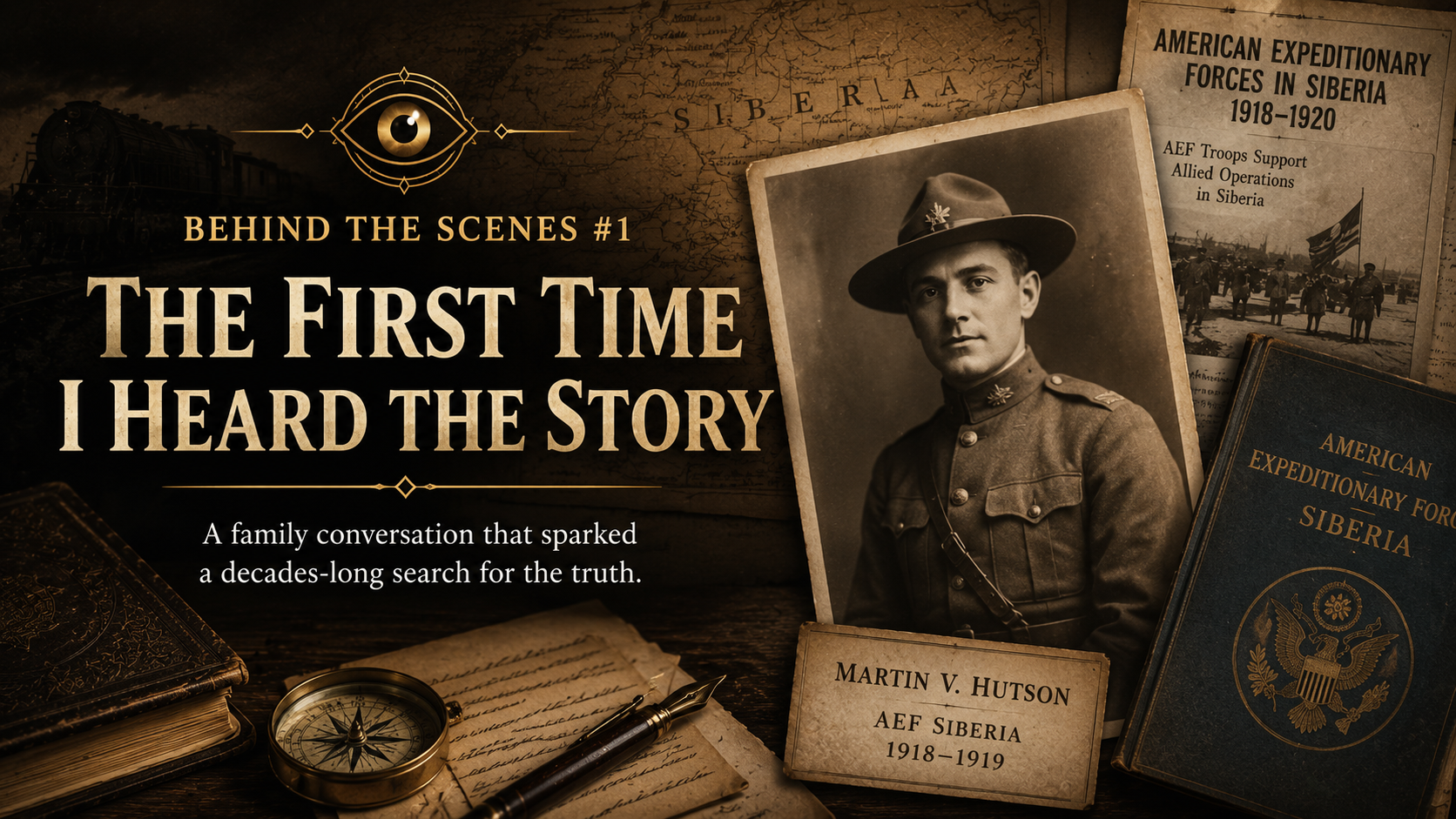
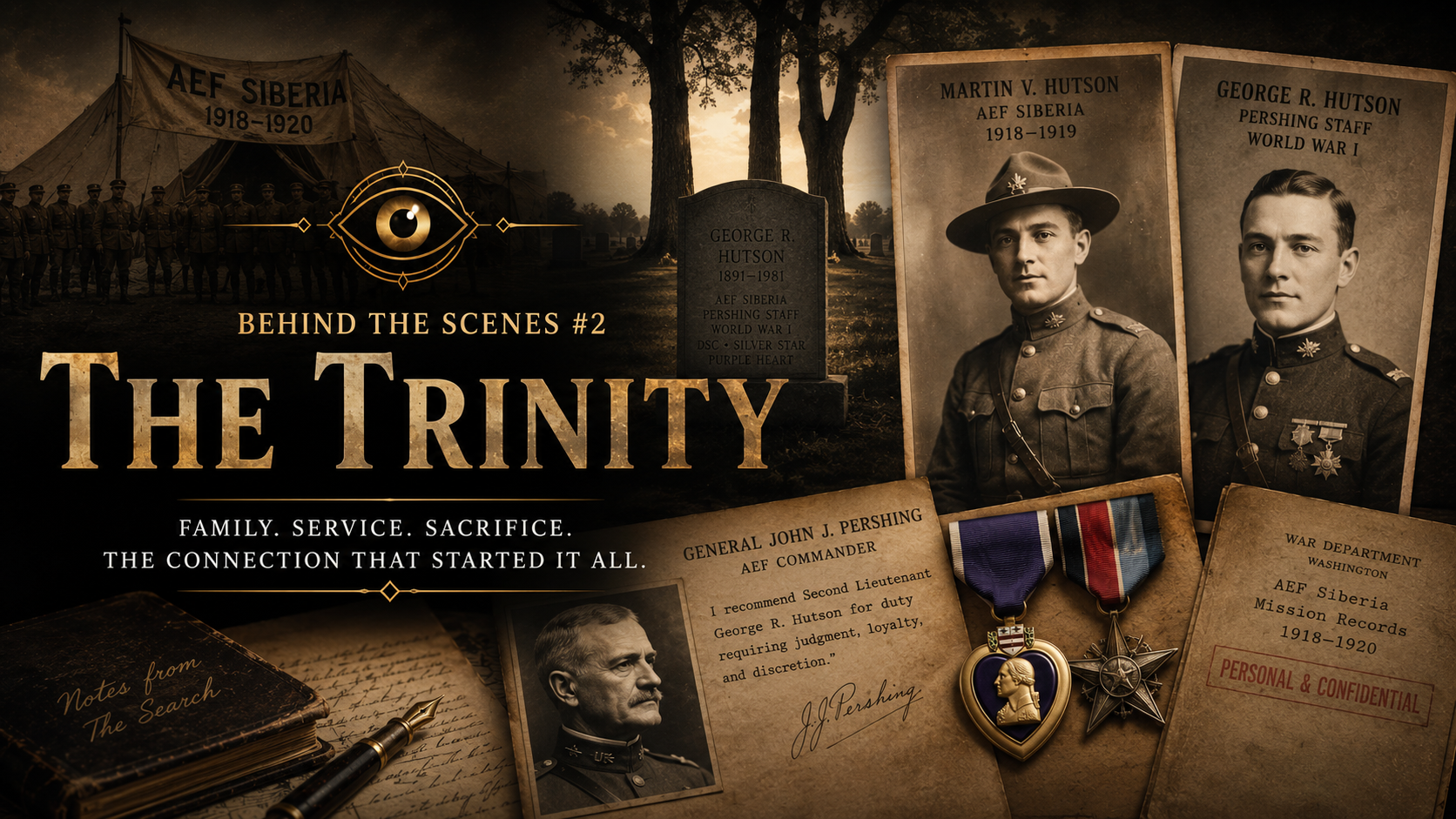
Here, you'll find short videos and companion essays by author Ben Everidge exploring how a childhood family story evolved into a decades-long historical investigation. From conversations with his great-uncle Martin Van Buren Hutson to years spent in the Library of Congress, the National Archives, presidential libraries, military collections, and international sources, this feature reveals the research process behind Rescuing Nicholas: The Secret Mission to Save the Tsar and the continuing work on The Hutson Project documentary series.
Rather than simply presenting conclusions, these features explain how discoveries were made, why certain documents became pivotal, and how one lead often opened the door to another. Visitors will learn how forgotten footnotes, overlooked military reports, intelligence files, diplomatic correspondence, and family records gradually combined to reveal a much larger story than anyone anticipated.
The written commentaries accompanying each video go even deeper. They examine historical context, evaluate competing interpretations, discuss the strengths and limitations of the available evidence, and explain why particular discoveries became turning points in the investigation. Some entries will revisit questions raised by viewers, while others will explore new archival findings as the research continues.
Behind the Scenes is intended to make the investigation itself transparent. It is an opportunity to see not only what was discovered, but how those discoveries were made and why historical research is often a process of persistence, curiosity, and careful documentation rather than sudden revelation.
The Story Will Continue to Unfold
The untold story behind the story, exclusive videos, research journals, archival discoveries, and personal reflections from author Ben Everidge as The Hutson Project continues to unfold.
Since this feature of History Had Eyes is a premium subscription service, we thought you might like free access to two of our Behind The Scenes videos and below that free access to read one of the analysis articles all related to Episode 1.
Enjoy!
History Had Eyes Analysis – Episode One: Why We Started Asking Questions
There is a moment in every historical mystery when someone decides the accepted answer no longer satisfies the evidence.
For our family, that moment began decades ago with a tape recorder.
On that recording was the cancer-raspy voice of a man his community and we knew well: our father, grandfather, brother, uncle, or neighbor, Martin Van Buren Hutson.
Martin was not a historian. He was not a novelist. He was not seeking fame.
He was telling what he had experienced as a young American soldier serving in Siberia at the end of World War I.
His account was astonishing.
Changing History?
According to Martin, the story the world had accepted about Tsar Nicholas II and the Romanov family was incomplete. He recounted that he had personally escorted a living Nicholas through Siberia more than a year after the Imperial Family’s reported execution in July 1918.
For most people, such a claim would be easy to dismiss. That was our initial reaction as well.
But then something unexpected happened. The more we researched Martin’s story and compared notes with other family members, the more questions emerged.
Not answers. Questions.
That distinction is important for you to know.
An Invitation to Inquiry
History Had Eyes is not an effort to demand belief. It is an invitation to inquiry.
For decades, historians, journalists, forensic experts, intelligence researchers, and authors have debated aspects of the Romanov mystery. New archives have opened. New documents have surfaced. New technologies have been applied.
Yet even today, discussion continues regarding the events surrounding the fall of Imperial Russia.
My personal interest was never to prove a predetermined conclusion. My interest was to determine whether Martin’s account deserved to be examined more seriously – to be examined publicly.
That meant following the evidence wherever it led.
Some evidence supported the accepted narrative. Other evidence raised additional questions.
Many pieces did not fit neatly into either category.
As this investigation continued, we discovered something larger than a family story. We found ourselves confronting a timeless challenge:
How do we determine truth when witnesses disagree, governments conceal information, records disappear, and generations pass?
That question extends far beyond the Romanovs. It touches intelligence operations. Diplomatic history. Journalism. Politics. National memory. Even modern debates over information and misinformation.
In many ways, History Had Eyes is less about Nicholas II than it is about the process of historical discovery itself.
The story begins with Martin, but it ultimately becomes a story about all of us.
How much evidence is enough? What questions remain worth asking? When does a historical case become truly closed? And who gets to decide?
As subscribers, you are not merely viewers of this project. You are participants in the investigation.
Encouraging More Open Thought
In the weeks ahead, we will share research leads, historical puzzles, archival discoveries, and reasoning behind many of the questions raised in the series.
Some may strengthen the accepted narrative. Others may challenge it.
All deserve examination.
That is the spirit in which History Had Eyes was created.
Not to tell you what to think, but to encourage you to think.
At the end of Episode One, we leave you with the same question that launched this project years ago:
If an American soldier spent the remainder of his life insisting that history got one of the twentieth century’s most famous stories wrong, shouldn’t we at least ask why?
The search continues. And now, hopefully, you will be a part of it.
Welcome to History Had Eyes!