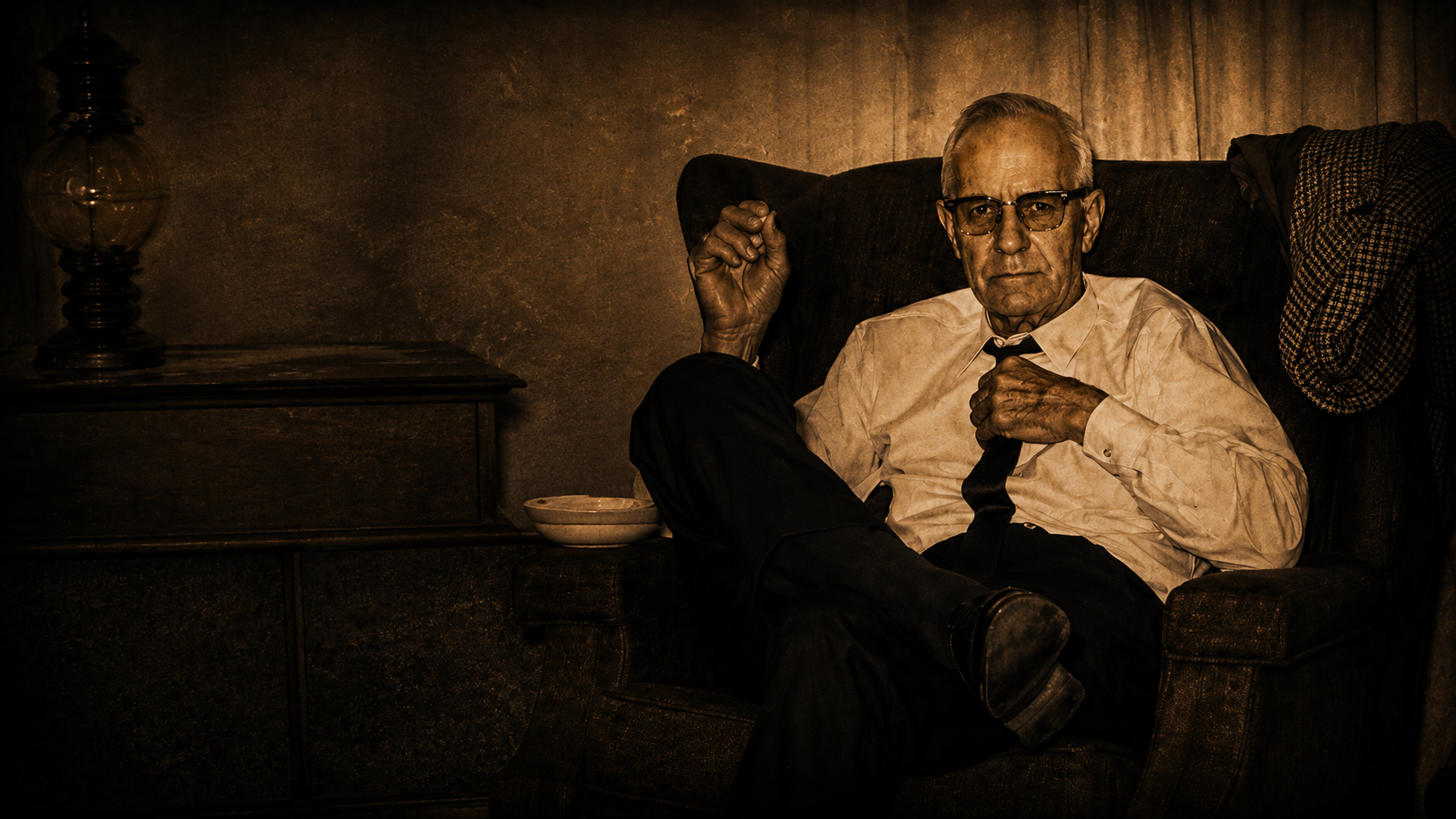
Martin Hutson’s Story
An Episode in His Life
Every great historical mystery begins with someone who was there.
For History Had Eyes, that person is Martin Van Buren Hutson - a young American Army private whose extraordinary account of a secret mission in Siberia became the foundation of this investigation.
In 1970, as he was nearing the end of his life, Martin traveled to Ohio to visit his only sister, my grandmother, Corinne Hutson Miller. During that visit, he shared a remarkable story with our family, one he had kept largely to himself for nearly fifty years. He described serving with the American Expeditionary Forces in Siberia after World War I and spending two weeks aboard Special Train #28 with a man he identified as Tsar Nicholas II of Russia.
At twelve years old, I found his account difficult to believe. Yet Martin's quiet confidence, combined with the details he shared, stayed with me long after that evening. Years later, while serving as a congressional staff member and conducting research through the Library of Congress, the National Archives, military records, diplomatic papers, and other historical sources, I began comparing Martin's recollections with the surviving documentary record.
One by one, names, dates, places, and events began to align in ways I had never expected.
This section of History Had Eyes follows Martin's own journey through his recorded testimony, my family's memories, and the decades-long investigation that followed. It explores the people he met, the questions he left behind, and the evidence that continues to shape our understanding of one of history's most controversial mysteries.
Whether Martin witnessed an extraordinary Allied intelligence operation or something history has yet to fully explain is for each visitor to consider.
We invite you to examine the evidence, follow the investigation, and decide for yourself.
"History had eyes. One of them belonged to a young Army private named Martin Hutson."
Why Martin Hutson
"Why would a young Army private be chosen for one of the most sensitive missions of the twentieth century?"
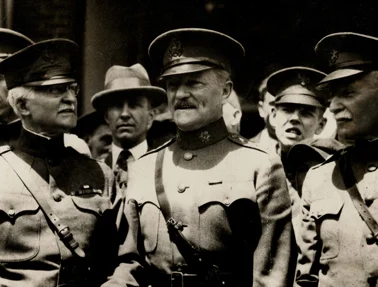
It is perhaps the most frequently asked question by readers of Rescuing Nicholas: The Secret Mission to Save the Tsar.
The answer begins not with Martin Hutson, but with his older brother, George Ranson Hutson, pictured above in the Fedora hat behind General John J. “Black Jack” Pershing’s right shoulder.
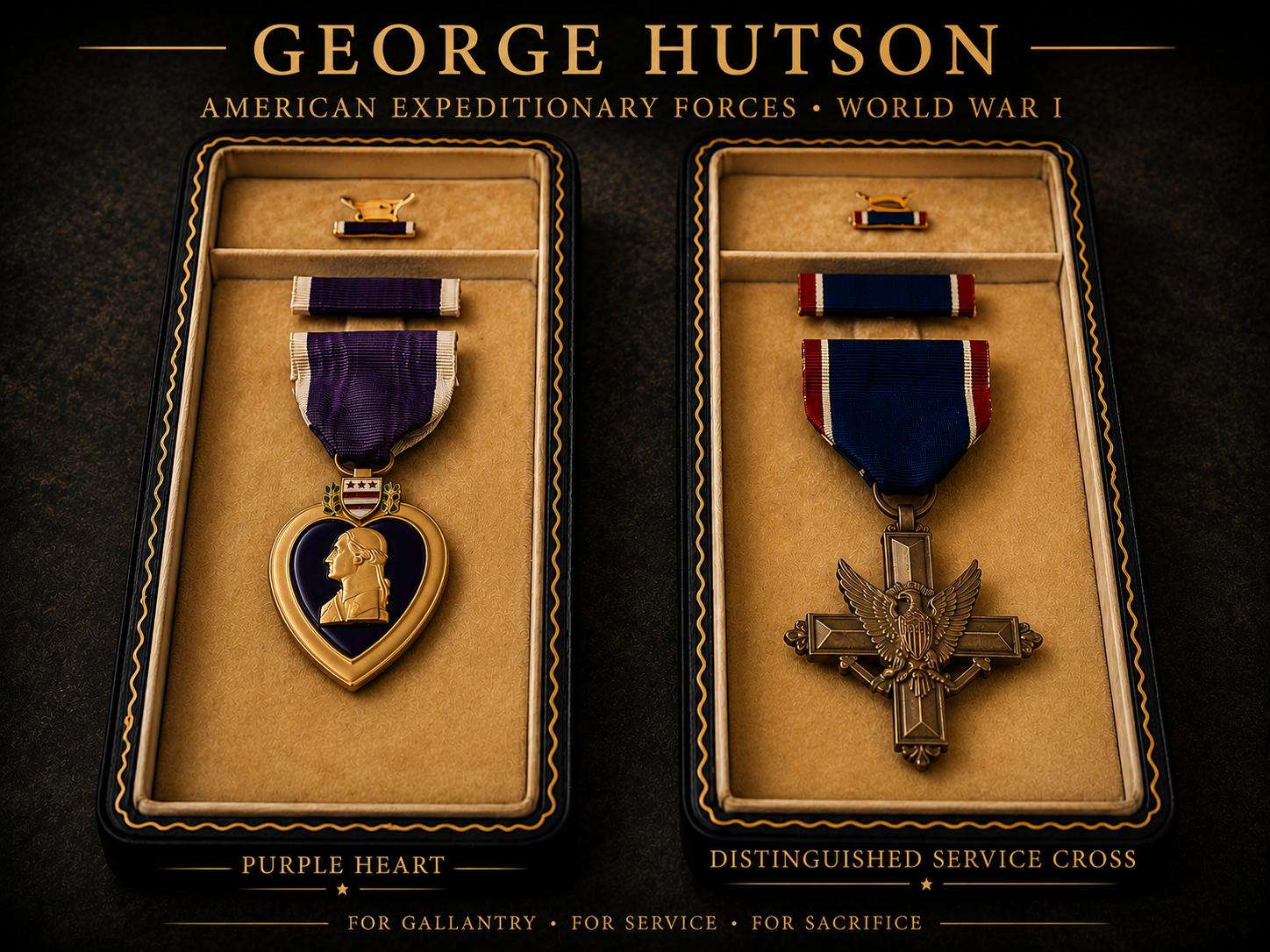
During the First World War, George served with the American Expeditionary Forces in Europe under General Pershing. Operating in intelligence assignments during some of the war's fiercest campaigns in France and the Black Forest region of Germany, George distinguished himself through extraordinary courage under fire. His service earned him the Distinguished Service Cross, the nation's second-highest award for valor at the time, along with the Purple Heart and what is known today as the Silver Star.
More important than his decorations was the confidence he earned from his commanders.
According to the Hutson family account, when General Pershing needed a trustworthy young soldier for a highly sensitive assignment with the American Expeditionary Forces in Siberia, George recommended his younger brother.
Martin possessed qualities that cannot be measured by rank.
He was dependable.
He was disciplined.
And, perhaps most importantly, George believed Martin could be trusted to keep a secret.
That recommendation ultimately placed Martin under the command of Major General William Sidney Graves, commander of the American Expeditionary Forces in Siberia.
According to Martin's recorded testimony, his assignment extended beyond providing security. He was instructed to spend time with the man identified to him as Nicholas Romanov, teaching him the rhythms, vocabulary, and accent of rural Tennessee. If the former Tsar eventually lived in exile in the United States under an assumed identity, speaking with a convincing Southern dialect could help him blend into his new surroundings rather than attract attention as a European aristocrat.
Tennessee was not an arbitrary choice.
It was Martin's home state, a place where he understood the language, customs, and culture instinctively. It was also the home state of William Gibbs McAdoo, President Woodrow Wilson's son-in-law and a prominent figure in the administration, who also plays a significant role in the broader story explored throughout this series.
Whether every detail unfolded exactly as Martin remembered remains part of the historical investigation. What is beyond dispute is that George Hutson's distinguished military service and reputation for judgment provide a compelling explanation for why an otherwise unknown private from Tennessee found himself at the center of one of history's most extraordinary alleged missions.
Sometimes history does not choose the most famous person in the room.
Sometimes it chooses the one who can be trusted to finish the mission and remain silent about it for the rest of his life.
"Martin Hutson was not chosen because he was extraordinary in rank. He was chosen because, he was extraordinary in character."
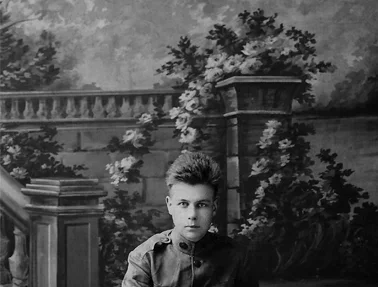
Martin Hutson, 1918
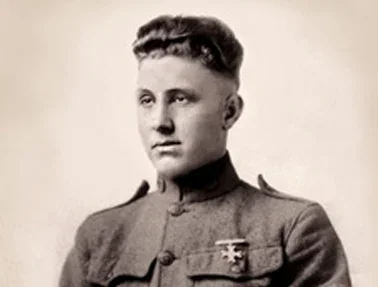
George Hutson, 1916
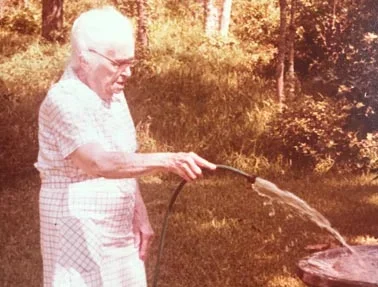
Martin’s Sister, Corinne Hutson Miller