The Evidence Room
Access Granted
Welcome to Our Member Investigators
Martin Hutson’s Timeline As We Know It Today
The Wilson Team Who Could Pull It Off
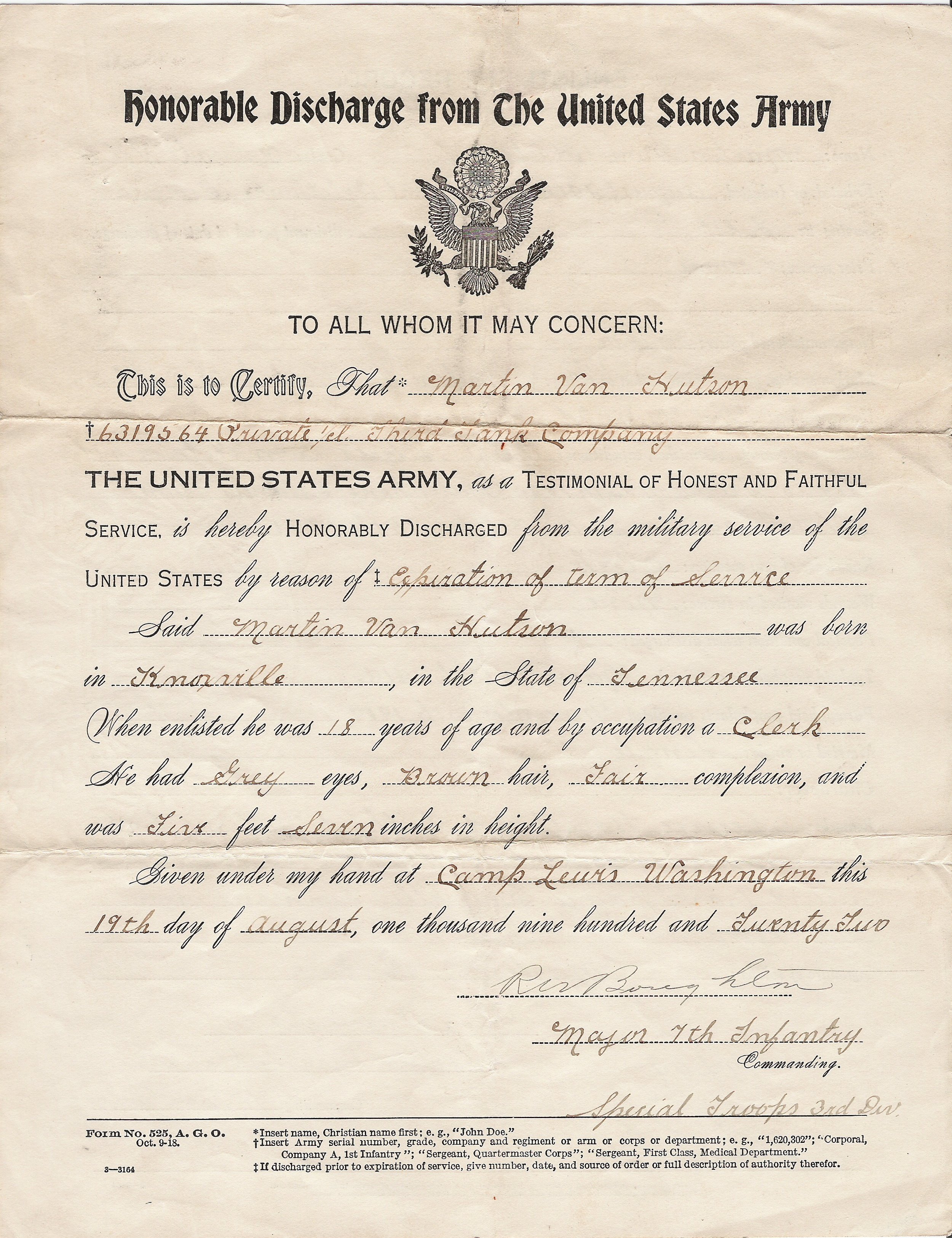
Martin Hutson’s Service Records

From Imperial Collapse to Special Train #28
March 15, 1917 | Nicholas II Abdicates
Tsar Nicholas II relinquishes the Russian throne as revolution overtakes the Romanov Empire. His abdication ends more than three centuries of Romanov rule and begins the struggle over the family’s fate.
July 17, 1918 | The Reported Ipatiev House Massacre
Nicholas II and his family are officially reported to have been killed in Yekaterinburg. This account becomes the accepted history, although questions about the family’s fate continue for decades.
August 1918 | Wilson’s Secret Instructions Reach General Graves
Secretary of War Newton D. Baker meets Major General William Sidney Graves privately at a Kansas City railway station. Baker delivers President Woodrow Wilson’s Aide-Mémoire, outlining the mission and limitations of the American Expeditionary Forces in Siberia.
November 9, 1918 | Kaiser Wilhelm II Flees Germany
Germany’s Kaiser Wilhelm II abdicates and escapes into exile in the Netherlands, marking the collapse of another major European monarchy.
November 11, 1918 | World War I Ends
The armistice ends the fighting in Europe, but military, revolutionary, and diplomatic conflict continues across Russia and Siberia.
Christmas 1918 | Wilson Meets King George V
President Wilson and King George V meet at Buckingham Palace during Wilson’s postwar visit to Europe. In the Rescuing Nicholas narrative, this meeting becomes central to the alleged Allied agreement concerning the protection and evacuation of the Romanovs.
Martin Hutson Enters the Mission
August 12–24, 1919 | Fort Oglethorpe to San Francisco
Martin Hutson departs Fort Oglethorpe, Georgia, and travels west to San Francisco as part of his assignment to the American Expeditionary Forces in Siberia.
August 26–30, 1919 | Departure for Vladivostok
Martin sails from San Francisco across the Pacific toward Vladivostok, the principal Allied port in eastern Russia.
September 17–21, 1919 | Arrival in Vladivostok
Martin arrives in Siberia and enters the complex military environment of the Russian Civil War, where American, British, Japanese, Canadian, Czech, and other Allied forces are operating.
September 27, 1919 | Special Train #28 at Harbin
Special Train #28 is reported in the Harbin railway yard. Its presence establishes an important operational link between Siberia, China, and the Allied transportation network.
The Train and the Handoff
November 16–21, 1919 | Martin Arrives at Irkutsk
Martin reaches the Irkutsk railway yard for what is officially described as guard duty.
November 17–22, 1919 | Martin Meets Nicholas
According to Martin Hutson’s recorded account, he meets the man he identifies as Nicholas Romanov aboard Special Train #28.
November–December 1919 | The Journey East
Martin travels with Nicholas aboard the train for approximately two weeks. During this period, he is assigned to guard him and help prepare him for a possible American exile by teaching him the speech patterns and mannerisms of the American South.
December 1–4, 1919 | Transfer to British Custody
Nicholas is transferred to British officials, completing the American portion of the alleged rescue operation. The handoff places him under the protection of representatives connected to King George V.
The Mission Closes
January 8, 1920 | AEF Withdrawal Begins
The United States begins withdrawing the American Expeditionary Forces from Siberia. The public military mission winds down, while the alleged Romanov evacuation moves into a new and increasingly hidden phase.
September 16, 1920 | New York Gold Deposit
Bolshevik revolutionaries attack Nicholas and his party as he deposits $900 million in gold at the Morgan Bank at 23 Wall Street in the heart of New York City. Rather than travel on to Chattanooga, Tennessee for exile as planned, Nicholas flees America for Europe.
“From abdication and revolution to a guarded train crossing Siberia, Martin Hutson’s mission unfolded at the intersection of war, diplomacy, intelligence, and royal survival.”
Who’s Who in the Romanov Mystery
Martin V. Hutson | The Eyewitness
Martin Van Buren Hutson was an American Expeditionary Forces soldier who served with General William Sidney Graves in Siberia during the Allied intervention following World War I. According to family testimony later shared with author Ben Everidge, Martin spent approximately two weeks guarding and traveling aboard Special Train No. 28 with Nicholas II before the former Tsar was transferred to British authorities at Harbin. His account became the foundation of Rescuing Nicholas and ultimately inspired The Hutson Project. Whether viewed as eyewitness testimony or family history requiring further verification, Martin's story is the catalyst for the entire investigation.
George R. Hutson | The Decorated Brother
George R. Hutson served under General John J. "Black Jack" Pershing during World War I and received the Distinguished Service Cross and Purple Heart for extraordinary bravery. According to family accounts, George recommended his younger brother Martin for the highly secretive Siberian assignment because he believed Martin possessed the discretion and character required for confidential duty. His military reputation helps explain how an otherwise ordinary soldier may have found himself assigned to an extraordinary mission.
Nicholas Romanov II | The Man History Declared Dead
Nicholas II, the last Emperor of Russia, officially abdicated in March 1917. Traditional history concludes that he and his family were executed at the Ipatiev House on July 17, 1918. The research presented in Rescuing Nicholas challenges that conclusion, arguing that American, British, and Allied records suggest Nicholas survived and became the subject of a multinational rescue operation. His fate remains the central question of the History Had Eyes investigation.
Alexandra Romanov | The Empress
Empress Alexandra Feodorovna was Nicholas II's wife and one of the most controversial royal figures of the First World War. Deeply devoted to her family, she has traditionally been believed to have died alongside Nicholas. The History Had Eyes investigation examines whether Allied intelligence distinguished between members of the Imperial family during evacuation planning and whether assumptions regarding her fate deserve renewed examination.
President Woodrow Wilson | The American Architect
President Woodrow Wilson authorized the American Expeditionary Force to Siberia in 1918. Central to this investigation is Wilson's confidential Aide-Mémoire, which outlined the objectives of the Siberian mission. The History Had Eyes research argues that this document may have contained language supporting the discreet protection and movement of Imperial non-combatants, making Wilson one of the most significant political figures in the alleged rescue effort.
King George V | The Silent Cousin
King George V was Nicholas II's first cousin and closely resembled him physically. History remembers George as the monarch who withdrew Britain's asylum offer. The History Had Eyes investigation explores a different possibility—that public refusal and private rescue may have been two separate strategies. If true, George's greatest contribution may have been one history never recorded publicly.
Vladimir Lenin | The Revolutionary Victor
As leader of the Bolshevik Revolution, Vladimir Lenin consolidated power while Russia descended into civil war. Official Soviet accounts placed responsibility for Nicholas's death upon revolutionary authorities. The investigation examines whether political necessity required the appearance of the Romanovs' execution regardless of what may actually have occurred.
Kaiser Wilhelm II | The Fallen Emperor
Germany's Kaiser Wilhelm II was another first cousin of Nicholas II. Following Germany's defeat in November 1918, he entered exile in the Netherlands. His fall marked the collapse of Europe's old monarchies and created an international political climate in which the survival—or disappearance—of another emperor carried enormous diplomatic consequences.
General "Black Jack" Pershing | America's Commander
General John J. Pershing commanded the American Expeditionary Forces during World War I. As commander of the AEF, his recommendations influenced personnel assignments and overseas operations. Family tradition holds that Pershing approved Martin Hutson's assignment after George Hutson's recommendation, linking America's most celebrated military commander to one of its least understood missions.
General William Sidney Graves | The Guardian of Siberia
General William Sidney Graves commanded the American Expeditionary Forces in Siberia from 1918 to 1920. His cautious leadership and insistence on neutrality distinguished him from many Allied commanders. In the History Had Eyes narrative, Graves emerges as one of the central operational figures responsible for protecting sensitive missions while avoiding international escalation.
Franklin Delano Roosevelt | The Keeper of Secrets
As Assistant Secretary of the Navy, Franklin D. Roosevelt oversaw naval logistics during the Siberian intervention. The investigation explores whether naval resources under his supervision supported the quiet transfer of protected individuals across the Pacific. Decades later, Roosevelt's The President's Mystery Story has prompted questions about whether fiction echoed events he had personally witnessed.
Winston Churchill | Lord of the Admiralty
During the period in question, Winston Churchill strongly opposed Bolshevism and favored Allied intervention in Russia. His role illustrates Britain's strategic interests during the Russian Civil War and provides important context for understanding the diplomatic environment surrounding any alleged rescue operation.
William Gibbs McAdoo | Wilson's Trusted Relative
Treasury Secretary William Gibbs McAdoo was one of President Wilson's closest advisers. His influence over wartime finance, transportation, and federal coordination makes him a potentially significant figure in understanding how large-scale confidential operations could have been organized.
Newton D. Baker | The Messenger
Secretary of War Newton D. Baker supervised the American military during the Siberian intervention. According to the History Had Eyes research, Baker personally delivered President Wilson's confidential Aide-Mémoire to General Graves before the Siberian mission began, making him a critical link between presidential policy and military execution.
The remaining individuals deserve the same treatment:
David Lloyd George | Britain's Prime Minister and political strategist.
Prince Arthur, Duke of Connaught | Senior royal and imperial representative.
Benjamin O. Johnson | American officer connected to Siberian operations.
John F. Stevens | Railway executive responsible for the Trans-Siberian Railway.
Ernest Harris | Allied intelligence participant and Siberian Consul General.
Sir Thomas Preston | British diplomat in Yekaterinburg.
Charles Crane | Industrialist, diplomat and Russia specialist.
Colonel Edward House | Wilson's closest political adviser.
Homer Slaughter | AEF officer whose records contribute to the investigation.
Carl Ackerman | Journalist whose reporting intersected with Siberian events.
Breckinridge Long | State Department official involved in diplomatic affairs.
Jerome Barker Landfield | Intelligence-connected diplomat.
Ralph Deman | U.S. intelligence chief whose activities influenced Allied operations.
Colonel Joseph Boyle | Legendary operative who previously rescued members of the Romanian royal family and demonstrated the feasibility of similar clandestine missions.
Gavin McNabb | Wilson adviser with connections to Imperial affairs.
Raymond Robbins | Intermediary with revolutionary Russia.
Sidney Reilly | Intelligence operative known for anti-Bolshevik activities.
James Charles Fox | Intelligence participant whose records intersect with the Siberian mission.